Industrial Robotics Applications Revolutionizing Assembly Line Operations
Walk through a modern assembly plant after a major automation upgrade and the change is hard to miss. The noise profile shifts first. There is still the mechanical rhythm of conveyors, torque tools, and part feeders, but less frantic motion around bottlenecks. Operators spend less time wrestling with repetitive handling and more time monitoring flow, resolving exceptions, and keeping quality on track. The robots do not replace the line itself. They reshape the way the line breathes.
That distinction matters. In real manufacturing environments, industrial robotics rarely arrives as a single dramatic event. More often, it enters cell by cell, station by station, where the economics, safety profile, and quality demands make the best case. A six axis robot starts tending a press. A SCARA unit takes over a fast pick and place task. A collaborative robot handles final screwdriving on a mixed model line. Then the wider effects begin to show up in throughput, scrap, staffing flexibility, changeover time, and maintenance planning.
Assembly operations are especially well suited to this kind of transformation because they combine repetition with variation. Parts need to be picked, oriented, fastened, inspected, moved, sealed, welded, packed, or palletized. Tolerances matter. Cycle time matters. Human fatigue matters. And none of it works unless the robotics layer ties cleanly into PLC programming, HMI programming, and the broader industrial control systems that keep the plant synchronized.
Where robots earn their place on the line
The best robotics applications solve a specific production problem with measurable impact. Plants rarely automate a task just because a robot can do it. They automate because the task creates scrap, injuries, overtime, line imbalance, or customer escapes.
A simple example is repetitive material handling between stations. If an operator lifts a 12 pound subassembly every 18 seconds for a ten hour shift, the problem is not only labor cost. It is ergonomic exposure, pace consistency, and the likelihood that the part gets bumped, dropped, or misoriented during a busy run. A robot can execute the same transfer thousands of times with stable path control. If the gripper is designed well and the upstream parts are presented consistently, the robot removes both fatigue and variability from the station.
Fastening is another high value application. On many lines, tightening a pattern of screws or bolts sounds straightforward until automation systems production scales. Missing one fastener, cross threading another, or torquing out of sequence can create rework that ripples downstream. A robotic fastening cell, integrated with torque tools and verification logic, can track each fastener event, reject incomplete assemblies, and feed results back into the plant data system. That kind of traceability has become more important in automotive, medical device, electronics, and appliance manufacturing, where one quality issue can trigger a costly containment effort.
Inspection has also changed. Machine vision tied to robotics allows inspection from controlled angles with repeatable lighting and focal distance. Rather than asking a human operator to confirm a tiny connector latch or label placement on every unit, a robot can present the product to a camera or move the camera around the product. The repeatability of the motion improves the reliability of the inspection itself. In practice, this often reduces the endless argument over whether a defect is process related or inspector related.
Assembly tasks that have changed the fastest
Some applications have become almost standard because the payback is so dependable. Others are gaining traction because controls and sensing have matured enough to make them practical on mixed product lines.
Here are five of the most common assembly line applications seeing strong results:
- Pick and place of components with high repetition and tight cycle time
- Robotic screwdriving, nut running, and torque verification
- Dispensing of adhesives, sealants, lubricants, or thermal materials
- Machine tending for presses, weld stations, and test equipment
- End of line packaging, case packing, and palletizing
Even within these categories, the real engineering challenge is rarely the robot arm alone. The challenge is the entire process window around it. How stable is part presentation? What happens when a feeder runs low? How do you recover after an e-stop halfway through a cycle? Can the station support product variants without an hour of reteaching? Those details separate a flashy demo from a production ready cell.
The control layer is where success or failure usually shows up
People outside manufacturing often imagine robotics as a self contained technology. On the plant floor, it is the opposite. A robot is another actor in a much larger system, and its value depends heavily on how well it works with the control architecture around it.
This is where PLC programming becomes central. The PLC is usually responsible for sequencing the station, coordinating safety, managing interlocks, confirming permissives, handling part tracking, and communicating with adjacent equipment. The robot controller may own the motion path and tool commands, but the production logic often lives in the PLC. When the integration is clean, the line behaves predictably. When the handshaking is sloppy, downtime follows.
A common issue in retrofit projects is unclear ownership of state. The robot thinks it is waiting for a part present bit. The PLC believes it already sent that status. The feeder thinks the nest is clear. The HMI shows “auto ready” even though the safety gate was bypassed during setup and never properly reset. None of these are advanced technical failures. They are integration failures, and they are surprisingly expensive.
Good industrial controls practice avoids this. State machines are defined clearly. Faults are categorized in a way operators can understand. Recovery logic is tested in abnormal conditions, not just in perfect cycles. Safety zones are designed around real maintenance access, not idealized CAD screenshots. If the station requires a human to intervene twice per shift, that intervention should be part of the design, not treated as an exception.
HMI programming plays a bigger role than many teams admit. On a busy line, the HMI is the interface between elegant engineering and messy reality. If fault messages are vague, operators lose time guessing. If manual mode screens are poorly arranged, technicians take longer to recover. If recipe management is buried under several screens and naming is inconsistent, changeovers become risky. A robot cell with excellent mechanics and poor HMI design can still become the most disliked station in the plant.
I have seen plants reduce mean time to recovery simply by rewriting alarm text and reorganizing the jog and setup screens. No new hardware. No faster robot. Just better communication between the machine and the people responsible for keeping it running.
Welding and joining remain powerhouse applications
Robotic welding is one of the oldest and most successful forms of industrial robotics, and it still drives enormous value in assembly environments. Spot welding in automotive body lines is the obvious example, but arc welding, laser welding, ultrasonic joining, and automated riveting have all expanded across industries.
The core advantage is repeatability under demanding cycle conditions. A skilled human welder can adapt on the fly in ways a robot cannot, especially on variable or repair work. But in a stable, high volume assembly process, repeatability wins. The robot hits the same path, angle, speed, and approach every cycle. If upstream fixturing and part quality are controlled, the result is lower variation and better throughput.
Still, welding cells reveal one of the clearest trade offs in automation. The robot improves consistency, but it also demands discipline from the rest of the process. Fixturing must hold tighter. Spatter management matters. Tip dress schedules matter. Cable routing matters. Sensor drift matters. If a plant automates welding without strengthening process control, it can end up with a very efficient system for producing repeatable defects.
Joining tasks beyond welding are seeing the same pattern. Press fit operations, staking, and adhesive bonding all benefit from robotic handling and force monitoring. In electronics assembly, dispensing a thermal interface material or conformal coating requires precision that operators struggle to maintain over a long shift. The robot does not get bored and does not speed up carelessly at the end of the hour.
Mixed model manufacturing changed the conversation
The old argument against robotics in assembly was straightforward: it works well when the product stays the same. That is no longer the whole story. Many plants now run mixed model production with shorter batch sizes and more frequent changeovers, yet robotics adoption continues to grow.
Several factors explain this. End of arm tooling has become more flexible. Vision systems can identify orientation and variant differences without hard mechanical change parts. Robot programming environments have improved. More importantly, line control strategies are better at handling recipe based production.
When a station receives product identification from a barcode, RFID tag, or manufacturing execution system, the PLC can load the correct sequence, communicate the proper routine to the robot, and display the active model on the HMI. That sounds ordinary, but it is the foundation for making robotics practical in high mix assembly. A line that once needed 30 minutes of manual adjustment between product families may now switch almost instantly if the fixtures, tooling, and software were designed with enough foresight.
There is a caution here. Flexible automation is often sold as if it were free. It is not. Supporting ten product variants is more complex than supporting two. Error proofing must cover more edge cases. Grippers may need compliance or adaptive fingers. Vision algorithms need real production validation, not just lab images. Recipe management requires discipline so that one parameter change does not create hidden quality problems. The flexibility is real, but it has an engineering cost.
Collaborative robots have their place, but not everywhere
Collaborative robots, or cobots, changed the conversation in plants that were hesitant to automate smaller manual tasks. Their appeal is obvious. They typically need less guarding in the right risk assessed application, take up less space, and can be easier to deploy for lighter duty work. For assembly lines with limited floor space or tasks that still require human interaction nearby, they can be a sensible fit.
The best cobot applications tend to be light assembly, pick and place, screwdriving, labeling, and presentation of parts to operators. They shine when the task is ergonomically poor, cycle time is moderate, payload is modest, and frequent reconfiguration is expected.
But cobots are not magic. Their speed limits can become a real constraint in high volume lines. If the line takt is aggressive, a traditional industrial robot in a guarded cell may outperform a cobot by a wide margin. Safety assumptions also get abused. “Collaborative” does not mean “safe in all conditions.” The tool, the part geometry, the pinch points, and the surrounding process all matter. A sharp bracket or driven fastener can change the risk profile significantly.
Plants do well when they evaluate cobots as one tool among many, not as a blanket answer. I have seen excellent results in electronics and light assembly, and I have also seen cobots installed in stations where a standard robot would have delivered better uptime and shorter cycle times.
Vision, sensing, and force control broaden what robots can do
Robots became dramatically more useful in assembly once they could react to more than fixed coordinates. Cameras, laser sensors, force torque sensors, and smart tooling give them enough feedback to handle parts that are not perfectly located every time.
Bin picking is a good example, though it remains tougher than vendors sometimes imply. If small metal parts arrive in random orientation, a robot with 3D vision may be able to identify grasp candidates and feed the line without expensive custom fixturing. When it works, the labor savings and footprint reduction are substantial. When lighting changes, part surfaces reflect unpredictably, or presentation density varies too much, the system can become temperamental. This is where sober testing matters more than sales optimism.
Force control is especially valuable in insertion tasks. Anyone who has tried to automate connector insertion, seal installation, or precision part mating knows that “close enough” is not enough. A rigid motion path can jam or damage parts if there is stack up in the tolerances. With force sensing, the robot can feel contact, search gently for alignment, and complete the Industrial equipment supplier insertion with less risk. This is one of the clearest examples of robotics moving from pure repetition toward controlled adaptability.
The hidden economics are often better than the headline labor savings
The first business case for assembly robotics usually starts with direct labor. That is understandable, but it is rarely the full story. In many plants, the better returns come from a combination of smaller effects that add up quickly over a year.
One automotive supplier I worked with justified a robotic sealant application cell partly on labor, but the stronger result came from material usage and warranty risk. Manual bead application varied enough that operators often overapplied material to stay safe. The robot tightened bead consistency, reduced waste, and improved cure reliability. The labor savings were real, but the quality and consumables savings made the project look much better after six months.
Something similar happens with machine tending. A robot may allow one operator to oversee multiple assets, but the real gain is often spindle utilization or test stand utilization. Machines sit idle less often while waiting for loading and unloading. Throughput rises without adding another expensive core process machine.
There is also a less visible but very real staffing benefit. Plants with physically punishing repetitive jobs struggle to retain people in those roles. Turning the hardest stations into automated or semi automated cells often improves hiring and retention in the rest of the department. That effect is difficult to capture neatly in a spreadsheet, but experienced operations leaders see it.
What implementation looks like in the real world
A successful robotics project on an assembly line usually starts with process understanding, not equipment selection. Teams need to know the actual cycle time, failure modes, operator motions, product variation, and quality risks before they decide what to automate and how.
The most effective projects tend to get four things right early:
- They define the process boundaries clearly, including upstream and downstream dependencies
- They assign control ownership between robot, PLC, and peripheral devices without ambiguity
- They build manual recovery and maintenance access into the design from the start
- They test worst case product variation before launch, not after the first customer complaint
This sounds basic, but it gets skipped more often than it should. Teams rush to robot payload charts and reach numbers before they have settled questions like part presentation, rework routing, reject handling, and cleaning access. Later, those unfinished decisions show up as nuisance faults, awkward operator workarounds, and maintenance frustration.
Commissioning is another stage where judgment matters. A station that cycles correctly for twenty minutes in debug mode is not ready. It needs extended runs, deliberate fault insertion, restart testing, and recipe validation across the actual product mix. The controls team should verify every handshake in both automatic and manual states. The maintenance team should practice the common recovery events. The production team should use the HMI as they will in real operation, under pressure and with gloves on.
Those details determine whether launch week is merely busy or completely chaotic.
Safety has become more sophisticated, not less important
As robotics spreads, safety design has become both more capable and more nuanced. Modern systems can combine area scanners, light curtains, safety PLCs, zone control, safe speed monitoring, and gated access in ways that preserve productivity while protecting people. That is a major improvement over the old pattern of simply putting a large cage around everything and hoping maintenance never needs to get inside quickly.
Still, the fundamentals remain stubbornly practical. If a sensor is mounted where it gets bumped every month, it will create downtime. If a gate is placed inconveniently, technicians will be tempted to defeat it. If the recovery procedure requires too many steps, someone will eventually improvise. Good safety engineering respects human behavior instead of pretending it does not exist.
This is another place where industrial control systems design makes a huge difference. Safety should not feel like a separate layer pasted onto the machine at the end. It should be integrated with the sequence, the HMI, and the maintenance strategy so that the safest way to work is also the easiest workable way.
What the next phase looks like on the plant floor
The next stage of robotics in assembly is less about dramatic new robot shapes and more about better integration, easier deployment, and smarter use of data. Plants want stations that can be reconfigured faster, diagnosed remotely, and tuned with less tribal knowledge locked in one programmer’s laptop.
That means tighter links between robotics, PLC programming, HMI programming, and plant level software. It means better alarming, cleaner recipe structures, and more transparent performance metrics. It means simulation used earlier, before steel is cut, but always checked against the messiness of actual production. It means modular cells that can be redeployed as product demand shifts.
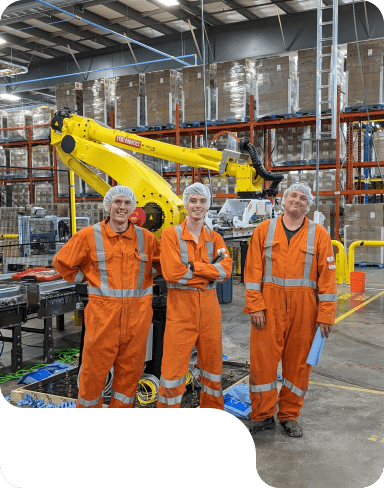
Most of all, it means treating robotics as part of operations, not as a special project that lives off to the side. The plants getting the best results are not the ones with the most robots. They are the ones that choose their applications carefully, integrate them into robust industrial controls architectures, and keep refining them after startup.
Assembly lines have always rewarded consistency. What industrial robotics adds is the ability to deliver that consistency at scale, across longer shifts, tighter tolerances, and more complex product mixes than manual systems can comfortably sustain. The revolution is not theatrical. It is measured in fewer injuries, cleaner data, steadier quality, shorter recovery times, and production teams that can spend more energy solving problems than repeating motions. That is the kind of change that lasts.
Sync Robotics Inc. — Business Info (NAP)
Name: Sync Robotics Inc.Address: 2-683 Dease Rd, Kelowna, BC V1X 4A4
Phone: +1-250-753-7161
Website: https://www.syncrobotics.ca/
Email: [email protected]
Sales Email: [email protected]
Hours:
Monday: 8:00 AM – 4:30 PM
Tuesday: 8:00 AM – 4:30 PM
Wednesday: 8:00 AM – 4:30 PM
Thursday: 8:00 AM – 4:30 PM
Friday: 8:00 AM – 4:30 PM
Saturday: Closed
Sunday: Closed
Service Area: Kelowna, British Columbia and across Canada
Open-location code (Plus Code): VHWR+PQ Kelowna, British Columbia
Map/listing URL: https://maps.app.goo.gl/xwtV2wEu8ZuKH3se8
Embed iframe:
Socials (canonical https URLs):
LinkedIn: https://www.linkedin.com/company/syncrobotics/
Instagram: https://www.instagram.com/syncrobotics/
Facebook: https://www.facebook.com/syncrobotics/
https://www.syncrobotics.ca/
Sync Robotics Inc. is an industrial robot and controls integration company based in Kelowna, British Columbia.
The company designs and deploys automation solutions for manufacturing operations across Canada.
Services include industrial robotics integration, controls integration, automation system design, deployment support, and related manufacturing automation solutions.
Sync Robotics Inc. is located at 2-683 Dease Rd, Kelowna, BC V1X 4A4.
To contact Sync Robotics Inc., call +1-250-753-7161 or email [email protected].
For sales inquiries, email [email protected].
Hours listed are Monday to Friday 8:00 AM–4:30 PM, with Saturday and Sunday closed.
For directions and listing details, use the map listing: https://maps.app.goo.gl/xwtV2wEu8ZuKH3se8
Popular Questions About Sync Robotics Inc.
What does Sync Robotics Inc. do?Sync Robotics Inc. designs and deploys industrial robot and controls integration solutions for manufacturing operations.
Where is Sync Robotics Inc. located?
Sync Robotics Inc. is located at 2-683 Dease Rd, Kelowna, BC V1X 4A4.
Does Sync Robotics Inc. serve clients outside Kelowna?
Yes—Sync Robotics Inc. is based in Kelowna, British Columbia and serves clients across Canada.
What are Sync Robotics Inc.’s hours?
Monday–Friday: 8:00 AM–4:30 PM; Saturday and Sunday closed.
How can I contact Sync Robotics Inc.?
Phone: +1-250-753-7161
General Email: [email protected]
Sales Email: [email protected]
Website: https://www.syncrobotics.ca/
Map: https://maps.app.goo.gl/xwtV2wEu8ZuKH3se8
LinkedIn: https://www.linkedin.com/company/syncrobotics/
Instagram: https://www.instagram.com/syncrobotics/
Facebook: https://www.facebook.com/syncrobotics/
Landmarks Near Kelowna, BC
1) Kelowna International Airport2) UBC Okanagan
3) Rutland
4) Orchard Park Shopping Centre
5) Mission Creek Regional Park
6) Downtown Kelowna
7) Waterfront Park